


National Society news
August 2026
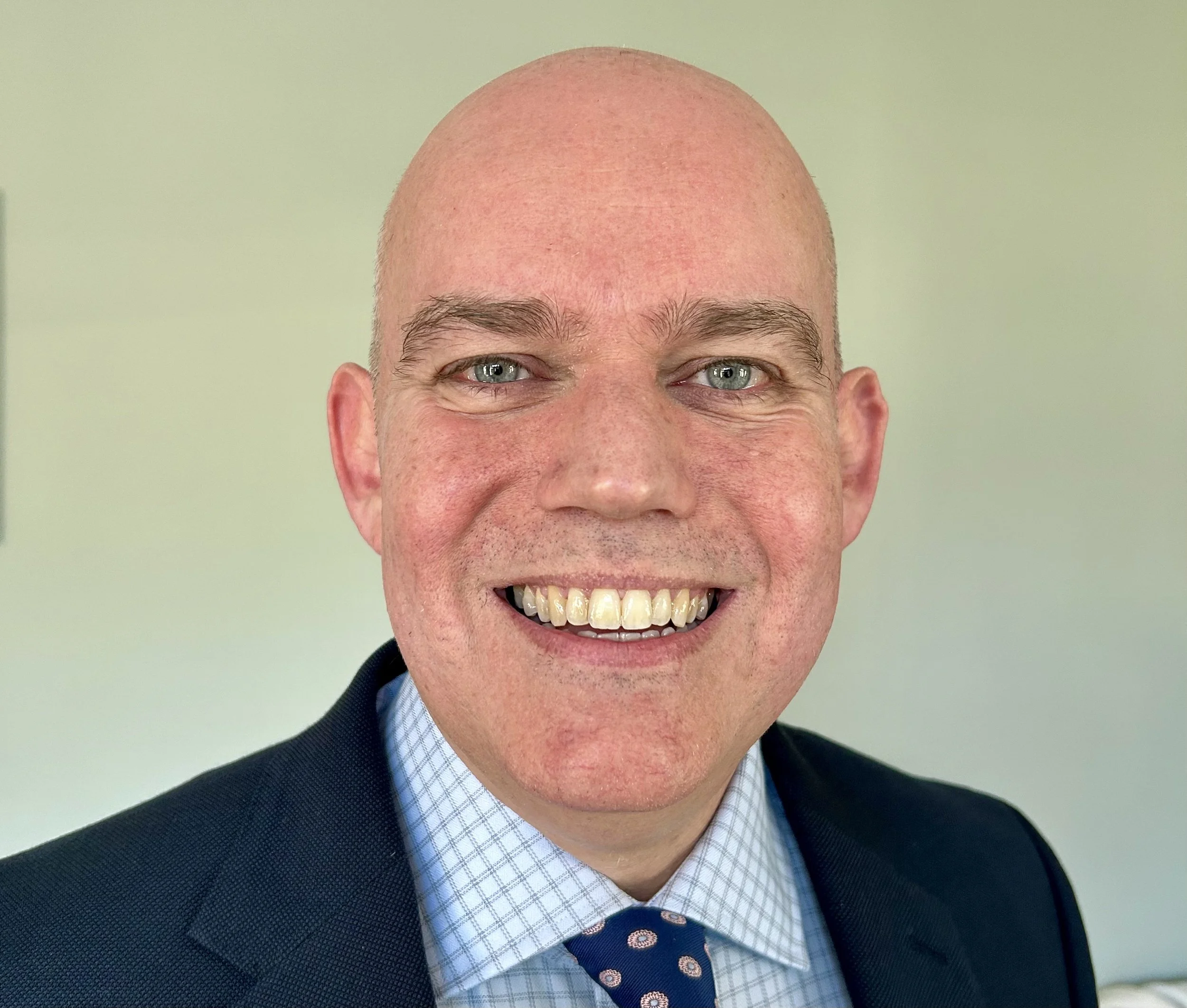
Charlie Lang to lead National Society for Education as Church of England’s Chief Education Officer.
Charlie Lang has been appointed as the next Chief Education Officer for the Church of England and Chief Executive of the National Society for Education.
Currently Programme Director of the Maximising Value for Pupils Programme at the Department for Education, Charlie will take up the role following the departure of The Revd Canon Nigel Genders CBE earlier this year.
As Chief Education Officer, he will help lead one of the country's largest education networks. The National Society oversees the Church of England's national education work in partnership with 41 diocesan boards of education and more than 4,700 Church schools educating over one million children, while also supporting education work across the Church in Wales.
The Church of England is a major presence in the education sector, with around a quarter of all primary schools in England, 228 secondary schools and more than 1,500 academies within its family of schools. The role combines strategic leadership, policy development and support for schools, dioceses, trusts and educational institutions, while championing the Church's vision for education, Deeply Christian, Serving the Common Good, which seeks to enable children and young people to flourish spiritually, academically and personally through "life in all its fullness".
Charlie Lang is a senior civil servant and education leader who has spent more than 20 years at the Department for Education, where he has led major policy and reform programmes across education and children's services. His work has included oversight of the SEND and Alternative Provision Review, the Timpson Review of School Exclusion and the Munro Review of Child Protection. As well as the Maximising Value for Pupils Programme he has led a range of national initiatives, including the expansion of the Free Schools Programme and the establishment of Behaviour Hubs and Alternative Provision Taskforces.
Alongside his career in public service, Charlie has served in the Church of England for more than two decades and is a Churchwarden in East London. He and his wife previously fostered children and are parents of two children who attend Church of England schools.
He is expected to take up the role in mid-November.
Commenting on his appointment, Charlie Lang said: “I am deeply grateful for the opportunity to serve as the next Chief Executive of the National Society and Chief Education Officer for the Church of England.
“My prayer is that we will listen afresh to children and young people at a moment when too many, particularly the most vulnerable and disadvantaged, are not experiencing life in all its fullness. Together, I believe we can play our part in shaping a hopeful future for childhood and education across England and Wales.
“I look forward to visiting and collaborating with colleagues in the National Society team and across the Church's education family - from dioceses, trusts and schools to colleges and universities - building on their great strengths and rich heritage so that more children and young people can flourish and encounter the love of Jesus.”
The Rt Revd Jonathan Frost, Bishop of Portsmouth and Chair of the National Society for Education, said:
"I am delighted to welcome Charlie Lang as the Church of England’s next Chief Education Officer and Chief Executive of the National Society for Education.
“Charlie brings to the role an exceptional combination of educational expertise, strategic leadership, and deep Christian commitment. Throughout his career Charlie has demonstrated a passion for enabling children and young people to flourish, particularly those who are most vulnerable or at risk of being overlooked. “Charlie’s experience at the highest levels of public service, together with his long-standing service in the life of the Church, will be an enabling and inspiring gift to our network of schools, colleges, MATs, Universities, diocesan teams and Boards of Education.
“Education is one of the Church of England’s most significant contributions to the common good. Today, more than one million children are educated in over 4,700 Church schools, and around 15 million people alive today attended a Church of England school. As we continue to champion a vision of education that is deeply Christian and which serves the common good, Charlie’s leadership will help ensure that many more children and young people experience life in all its fullness. “I look forward to working closely with Charlie in the years ahead. We assure him of our prayers as he takes up this important ministry and leadership role.
“I would also like to express my appreciation for Andy Wolfe’s inspiring, dedicated, and invaluable leadership as Interim Chief Executive Officer. Andy will continue in the interim role until Charlie takes up his new role in the Autumn.”
William Nye, Secretary-General of the Archbishops' Council, said:
“I am very much looking forward to working with Charlie as the Church’s Chief Education Officer. He will build on the excellent work of Nigel Genders and Andy Wolfe, helping schools, churches and parishes work together for the flourishing of all the children in our schools.”
26th August 2026
July 2026
National Society for Education Awarded British Dyslexia Association Dyslexia Friendly Quality Mark
The National Society for Education is proud to announce that it has been awarded the British Dyslexia Association (BDA) Dyslexia Friendly Quality Mark, recognising its sustained commitment to inclusive, accessible, and high-quality professional learning.
This achievement marks a significant milestone, as the National Society for Education becomes the first provider of professional learning to attain this highly regarded accreditation. The award reflects a rigorous and comprehensive two-year verification process, during which the Society’s programmes and practices were carefully reviewed.
The Quality Mark assesses dyslexia-friendly commitment and practice at every level of an organisation, ensuring a consistent and deeply embedded approach. For the National Society for Education, this has meant demonstrating excellence not only in programme design and delivery, but also in organisational culture, leadership, and learner support systems.
As a direct result of working closely with the BDA, the National Society has significantly expanded the support available to participants with specific learning differences, enabling more equitable access to professional development opportunities. This includes enhanced guidance, tailored resources, and improved accessibility across learning platforms. An emphasis has also been placed on equipping participants to use assistive technology – which supports their own learning and enabling modelling in the classroom.
Participants have already seen the impact of these changes:
“Really enciteful and some really good ideas I hadn't thought about like Text to talk.”
“Its great to know that there is always some form of technology or person that I can turn to for support.”
“Really helpful - I will be coming back and using this to support me.”
Importantly, the Society recognises that achieving the Quality Mark is not an endpoint but part of an ongoing journey. As a BDA Dyslexia Friendly organisation, it is committed to continuous review, reflection, and development of its support systems, ensuring that inclusive practice evolves alongside emerging research and learner needs.
This commitment is particularly significant given the Society’s role as a provider of the NPQ SENCO programme. In preparing current and future Special Educational Needs Coordinators, the organisation believes it is essential to model best practice in supporting individuals with dyslexia and other specific learning differences.
The National Society for Education looks forward to building on this achievement as it continues to champion inclusive practice and high-quality professional learning for all.
28th July 2026
February 2026
Interim Chief Education Officer for the National Society for Education welcomes child‑focused approach and emphasis on improving inclusion and standards as “two sides of the same coin” but says “complexity of implementation should not be underestimated.”
The Church of England has welcomed the Government’s announcements ahead of the Schools White Paper and Special Educational Needs and Disabilities (SEND) consultation, recognising the opportunity they offer to secure long‑term improvements for children, young people and families.
The White Paper’s child‑centred approach sets out what every child needs to thrive, and outlines ambitious steps towards achieving this longer-term vision together. We commend this direction, which reflects themes within the Church’s recent Class of 2040 work in partnership with Catholic Education Service and Confederation of School Trusts and its own wider Vision for Education, rooted in wisdom, hope, community, dignity, and the flourishing of every child.
As the largest single provider of schools in England, and with a long history of serving the most vulnerable, the Church - through the National Society for Education - has committed to engaging constructively with the consultation process and examining the proposals closely.
Notable inclusions relate to strengthening support for children with SEND and improving the coherence of the SEND system, recognising the importance of shared planning across schools, trusts, dioceses, local authorities and specialist services.
There is a clear intention to deepen evidence-informed SEND/Inclusion expertise within mainstream school settings and to increase investment in professional development for leaders and teachers. It also highlights the importance of a careful and phased approach to reform. Any changes to the Education, Health and Care Plan (EHCP) system will need to protect children’s rights and give confidence to parents. Increased expectations on mainstream schools should be matched by realistic provision for staff wellbeing, workload and training.
The White Paper’s ambition to enhance collaboration across the school system aligns with the Church’s experience that well‑led, vision‑driven school trusts can enable children and adults to flourish together. A broader curriculum and wider enrichment opportunities are similarly positive indicators of a rounded educational vision.
At the same time, any changes to school organisation must be approached with coherence and sensitivity to local context, particularly for rural and small schools. Different areas will require differing forms of support and timelines, and robust oversight and bespoke regional collaboration will be essential to ensure that such structures genuinely improve outcomes for disadvantaged pupils and preserve each school’s distinctive ethos and identity.
The National Society for Education will study the full detail carefully and continue to work with Government, Dioceses, Multi Academy Trust (MAT) and school leaders, sector partners and local communities to help ensure these reforms translate into long-term sustainable benefits for children and young people.
Andy Wolfe, Interim Chief Education Officer for the Church of England said:
“We welcome the Schools White Paper’s long‑term, child‑focused approach and its emphasis on improving inclusion and standards as two sides of the same coin. These themes are at the heart of our Vision for Education and our core mission to enable the flourishing of every child.
“There is much here that has the potential to strengthen the system, though the complexity of implementation should not be underestimated. Changes to SEND provision in particular, will need time, wisdom and careful consideration by a wide range of stakeholders if they are to succeed.
“We look forward to engaging thoughtfully with the consultation and working positively with others to help ensure the proposals translate into long-lasting improvements for children, families and communities.”
23rd February 2026
November 2025
Chief Education Officer to step down after a decade’s service
The Revd Canon Nigel Genders will step down as the Church of England’s Chief Education Officer and Chief Executive of the National Society for Education in the new year, after more than ten years in the role.
He will take up a new role as the Government’s Chief Schools Adjudicator in February.
Nigel has led the National Society for Education (NSE) since 2014, overseeing its work with over 4,700 Church schools educating more than one million children. Under his leadership, the Church has renewed its Vision for Education – Deeply Christian, Serving the Common Good – and expanded its engagement with the sector.
Nigel’s tenure has seen significant growth in the NSE’s work. This includes the introduction of a Church-led programme of National Professional Qualifications (NPQs), a revised framework for the Statutory Inspection of Anglican and Methodist Schools (SIAMS) and strengthening relationships between schools, their local communities, parish churches and households. In recognition of his contribution, Nigel was awarded a CBE in the King’s Birthday Honours in 2023.
Nigel’s career in education spans more than 30 years of ordained ministry, including roles as a parish priest, school chaplain, university governor, and Director of Education for the Diocese of Canterbury. He was made a Canon of Canterbury Cathedral in 2020.
Nigel Genders said: “It has been a profound privilege to serve the Church’s ministry in education alongside such a capable and dedicated team. I have been continually inspired by the passion and dedication of educators, leaders, and diocesan teams who work tirelessly to shape lives and communities. I look forward to continuing to serve education in a new capacity, supporting fairness and integrity across the school system.”
The Bishop of Portsmouth, Jonathan Frost, who chairs the NSE, said: “Nigel Genders has offered exceptional, enabling, and inspirational leadership in a vital area of national life. He has overseen the renewal of the Church of England’s vision for education, a vision which places human flourishing at its heart. One of many ways the Church of England serves the common life of our nation is through its network of schools, colleges and academies; Nigel leaves a solid foundation for the Church’s work in the future. The Governing Council of the National Society for Education gives thanks for Nigel’s leadership and is wholly resolved to build upon the foundation he has established.”
William Nye, Secretary General of the Archbishops’ Council, said: “Nigel has been an outstanding servant of the Church and leader in its work with children and young people. He has transformed the National Society in his time as Chief Executive; and he has been a terrific colleague as a Chief Officer in the National Church institutions. We will all miss him.”
Andy Wolfe, Executive Director of Education, will lead the NSE as Interim Chief Executive and Chief Education Officer during the period of vacancy following Nigel’s departure.
Commenting on the interim appointment, Bishop Jonathan added: “As Executive Director, and Nigel’s deputy, Andy Wolfe is well placed to lead the NSE during this period. He brings rich experience and trusted leadership to guide our work until a substantive appointment is made.”
A timetable for recruitment will be announced in due course.
25th November 2025
February 2025
Following the conclusion of the Makin Review four-step process, the National Society for Education (NSE) acknowledges that the National Safeguarding Team (NST) will apply to bring a complaint under the Clergy Disciplinary Measure against Bishop Paul Butler, who served as chair of the NSE’s trustees from January 2020 to December 2023.
The Makin Review examined the Church’s handling of the horrific abuse by the late John Smyth. At the heart of this case are the survivors and victims who have endured lifelong effects from this appalling abuse.
We welcome the due process and diligence of the NST and await the findings.
While the Church of England supports its schools through Diocesan Boards of Education, these schools are part of the state education system and are fully accountable to the Department for Education, Ofsted, and local authority safeguarding arrangements. The Church does not run these schools operationally and their safeguarding arrangements are fully independent of the Church.
The NSE has robust safeguarding arrangements in place for all its activities and is committed to upholding the highest standards of safeguarding in the areas we are responsible for.
26th February 2025